
Advising on cereal choices
I want to emphasize that the cereal you choose should be fortified with iron and low in added sugars. Fortified breakfast cereals can be a great source of iron, with a single serving providing about 18 mg, which meets the daily recommended value for most women. If you’re always on the go, this is a quick way to meet your nutritional needs. Just be careful about those added sugars! Now, onto Swiss chard, or "Acelga."Explaining Swiss chard benefits
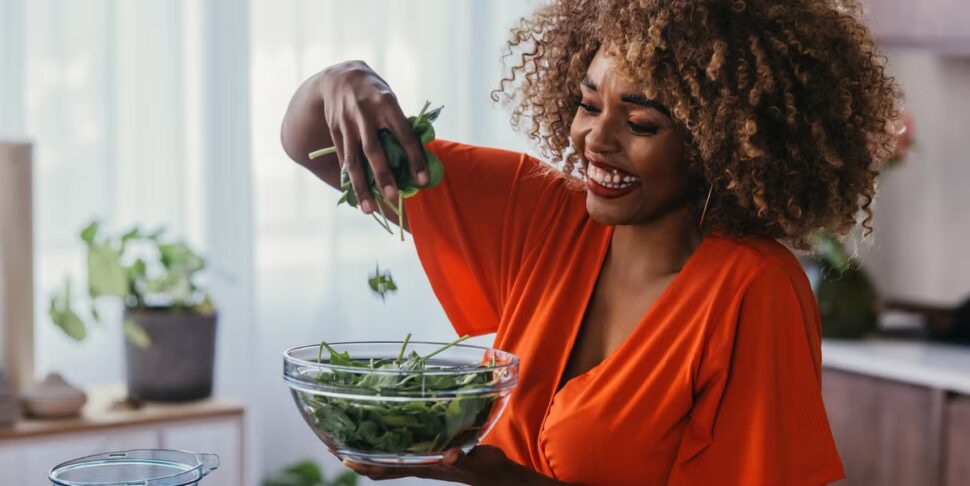
One cup of cooked Swiss chard provides about 3.68 mg of iron according to USDA stats. It also includes protein, fiber, calcium, vitamin A, and vitamin C. Plus, it’s high in potassium, offering 961 mg per cup, which makes it a great choice for heart health. If spinach isn’t your favorite, other leafy greens can work well in salads, stir-fries, or smoothies. Next up, I’ll refer to red kidney beans as "Frijoles rojos."Discussing red kidney beans and oats
One cup of red kidney beans contains about 5.2 mg of iron, 13.1 g of fiber, and 15.3 g of plant protein, according to USDA data. The high fiber content also makes them quite filling, which is great for anyone looking to lose weight. In Spanish, that’s: "Una taza de frijoles rojos contiene 5,2 mg de hierro." Now, when it comes to oats, 100 grams of whole-grain, steel-cut oats provide 3.8 mg of iron, while rolled oats give you even more—4.34 mg!Clarifying oat information
According to the USDA, 100 grams of whole-grain, steel-cut oats provide about 3.8 mg of iron, while the same amount of rolled oats gives 4.34 mg. Oats are also rich in fiber, offering between 10.4 and 12 g per 100-gram serving. In Spanish, "steel-cut oats" can be translated as "avena cortada a acero,” but it’s more commonly referred to as "avena troceada." A shorter version could just be "avena integral cortada," which retains the meaning without being awkward.

Más noticias
El gran engaño del azúcar: lo que la fructosa realmente hace en tu cuerpo
El azúcar engorda, ataca los dientes y favorece enfermedades crónicas....
Si añades este ingrediente a tus frijoles, tendrás menos gases
Las legumbres son muy saludables, pero no sin razón se...
Comida congelada frente a conservas: ¿cuál es mejor? La respuesta es muy clara.
La fruta y verdura de temporada es saludable y respetuosa...